
English| EUR
Suggested for you
More currencies
Choose a language
Conchagua Volcano permits overnight camping under park access rules managed by the local conservation authority in La Unión. Unlike many Central American volcanoes with restricted summit zones, Conchagua allows visitors to pitch tents near the viewpoint and spend the night above the Gulf of Fonseca. This guide covers the regulations, entry requirements, and logistical details that govern camping at the site.
Quick answer
Camping is permitted at Conchagua Volcano with a conservation fee of 5 USD per person, payable at the viewpoint entrance. The park operates 24 hours daily with no advance permit required, though arrival between 16:00 and 18:00 is recommended to set up camp before dark. No official campground infrastructure exists—visitors camp informally near the summit viewpoint on a first-come basis.
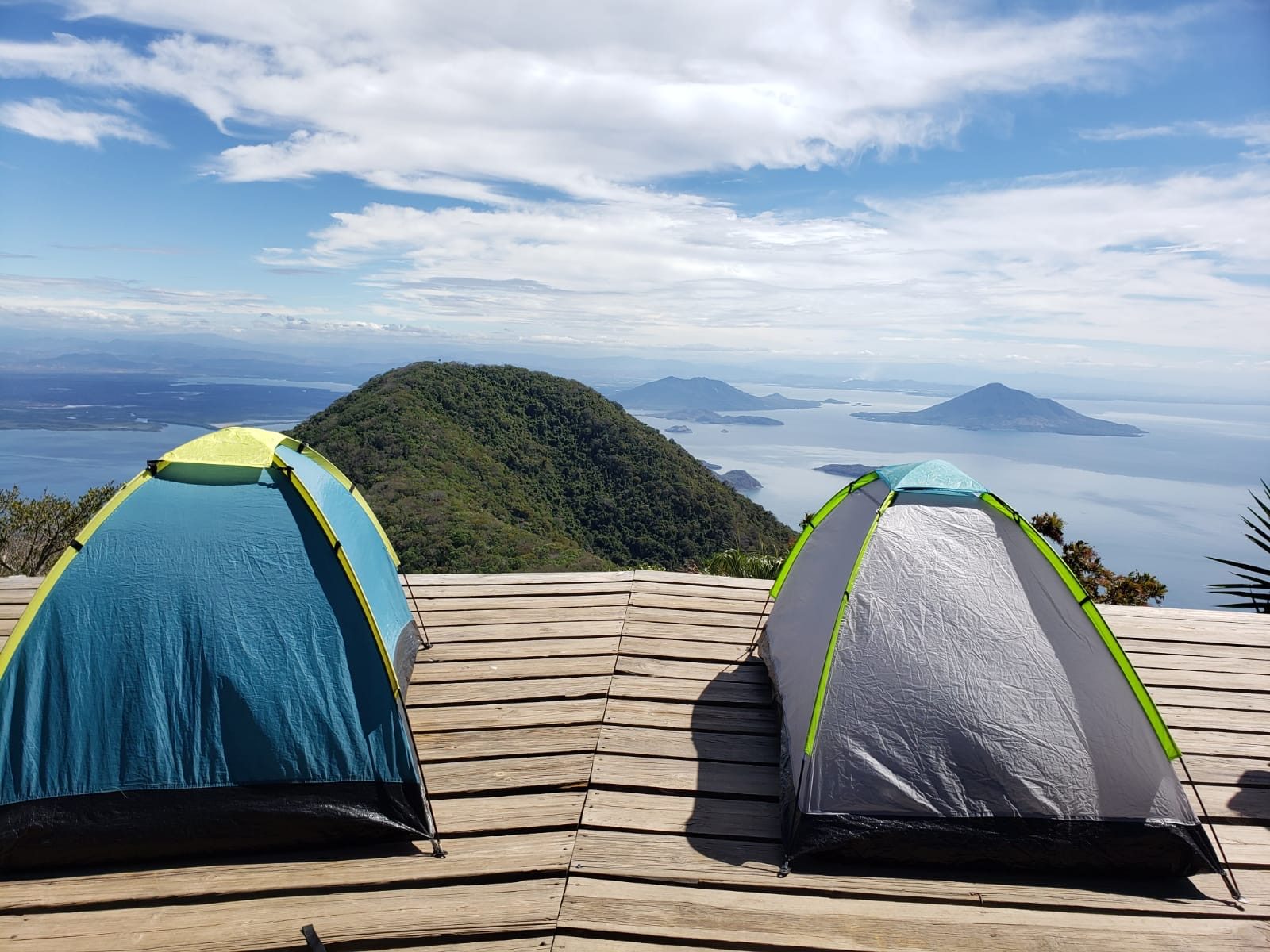
Conchagua Volcano sits 1,242 meters above the eastern tip of El Salvador, overlooking three countries and the Pacific where it meets the Gulf of Fonseca. The summit is one of the few volcanic peaks in the country where overnight stays are actively tolerated by park authorities, a legacy of local community management rather than formal national park designation. That distinction matters: camping here operates without the infrastructure, reservation systems, or ranger patrols typical of protected areas elsewhere in Central America. Park access follows an open model—no gates, no permits issued in advance, no quotas on overnight visitors. The 5 USD conservation fee is collected at a small booth near the viewpoint, typically staffed during daylight hours. Payment funds trail maintenance and the informal custodianship of the site by residents of the villages on Conchagua's lower slopes. Visitors who arrive after the booth closes are expected to pay the following morning. The arrangement relies on self-regulation, and the absence of formal enforcement means compliance varies. Camping itself is unstructured. No designated tent platforms, water sources, or sanitation facilities exist at the summit. Visitors select flat ground near the viewpoint or along the ridgeline, pitching tents on volcanic soil interspersed with low scrub and exposed bedrock. Wind exposure is significant, particularly in the dry season when gusts sweep unobstructed across the ridge. The lack of barriers means campers can position themselves for unobstructed sunrise views over the gulf, but it also means no shelter from weather or separation from the cliff edges that define the summit's northern perimeter. The recommended arrival window addresses two constraints: the final approach involves an unpaved road followed by a steep footpath, both difficult to navigate in darkness, and sunset from the summit—one of the primary reasons visitors camp here—occurs shortly after 18:00 for much of the year. Arriving in the late afternoon allows time to pay the fee, scout a campsite, secure gear against wind, and position for the evening's light over the bay of La Unión and the volcanic cones of Honduras and Nicaragua beyond. Departure timing is similarly self-determined, though most campers leave by mid-morning to avoid the midday heat on the descent.
“Conchagua operates without the infrastructure, reservation systems, or ranger patrols typical of protected areas elsewhere in Central America.”
Conchagua Volcano provides continuous access for campers, remaining open every day of the week to accommodate visitors. This 24-hour availability allows for flexibility in scheduling arrivals and departures.
The best arrival window is 16:00–18:00, which serves as a mandatory safety practice to ensure camp setup occurs before nightfall. Navigating the access routes during daylight hours is necessary for safety and allows visitors to experience sunset views from the summit.
Dry, 20°C to 30°C
Ideal for clear panoramic views and stable camping conditions.
Frequent rain, 22°C to 28°C
Requires waterproof gear and careful monitoring of trail conditions.
—
Providing a quieter experience for those seeking isolation at the viewpoint.
—
Expect more activity at the camping sites and higher noise levels.
Verdict: The best slot is a weekday arrival between 16:00 and 18:00 during the dry season months of November through April.
Volcán de Conchagua is located in the department of La Unión, El Salvador. Reaching the camping area requires navigating to the upper slopes where the designated viewpoint entrance is situated.
CA-1 highway to La Unión, then follow signs toward Conchagua town and volcano
Private hire from La Unión center to the volcano viewpoint entrance
Local trail network from the town of Conchagua to the summit area
You must navigate directly to the viewpoint entrance to register and pay the conservation fee. A 4x4 vehicle is recommended due to the steep and unpaved nature of the final ascent.
Prepare these items and steps to ensure a safe and compliant camping experience at Conchagua Volcano.
Everything you need to know about conchagua volcano camping el salvador
Yes, access to the site is available every day of the week from 00:00–23:59. This allows for flexible planning when you choose conchagua volcano camping el salvador for your next trip.
The entrance fee is 5 USD per person. This conservation fee is payable directly at the viewpoint entrance to support local park maintenance.
We recommend arriving between 16:00–18:00 to ensure you have sufficient daylight to set up your tent. This window is essential for enjoying the sunset views over the Gulf of Fonseca.
The site is located at Volcán de Conchagua, La Unión, El Salvador. It serves as a prominent landmark in the eastern region of the country.
Visitors must pay the conservation fee upon arrival at the entrance. Following established park guidelines ensures that the natural beauty of the volcano remains protected for future hikers.
Families are welcome to experience this natural landmark, provided they come prepared for outdoor conditions. Careful planning regarding gear and supplies is encouraged for a comfortable stay.
The main draw for those engaging in conchagua volcano camping el salvador is the observation of sweeping coastal vistas. Many visitors hike to the viewpoints to witness the panoramic scenery during the transition from day to night.